Rapid Prototyping
3D Printing or Additive Manufacturing (AM) technology is developing rapidly in the recent years, disrupting the traditional prototyping process. What before took months to prototype using CNC machining, now takes days with 3D printing. Every month there is a new method, equipment, a process that improves drastically from the previous in terms of speed of production, quality, near net shape characteristics, size limitations (min. and max.), and many others.
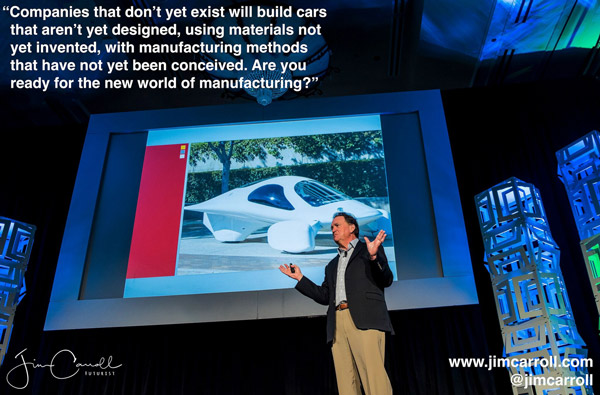
Jim Carroll, Futurist, Trends and Innovation Expert advises companies to “think big, start small, and scale fast.” He and people like Dr. Tim Marshall, Head of the Institute for Manufacturing describe Additive Manufacturing (AM) as one of the biggest disrupting technologies of the 21st century enabling the 4th industrial revolution.
We work with many industry-leading Additive Manufacturing companies and their distributors that have capacity and capability to deliver any part in days. These innovators have decades of experience in 3D Printing technology, from which you will benefit.
Stratasys is a manufacturer of 3D printers and 3D production systems for office-based rapid prototyping and direct digital manufacturing solutions.[1]
Stratasys manufactures in-office prototyping and direct digital manufacturing systems for automotive, aerospace, industrial, recreational, electronic, medical and consumer product OEMs.[2]
With their Production Series 3D printers, they can meet various manufacturing needs: Objet500 Connex1, Fortus 450mc, and Stratasys J750.
Stratasys offers a variety of FDM Thermoplastics and PolyJet Photopolymers that can simulate many end product characteristics. Even major companies like Lockheed Martin have made use of their machines.
Similarly to Stratasys, the South Carolina-based company 3D Systems has a historic presence in the 3D printing industry. Established in 1986, founder Chuck Hull is championed as the father of stereolithography.
This past year, 3D Systems unveiled the Figure 4, their first scalable and fully-integrated additive manufacturing platform. The system is capable of producing mass customized and end-use parts and is said to print at around 50 times the speed of other SLA platforms.
The German company EOS is considered by many to be the leader in metal 3D printing technology. More recently, the manufacturer has been focused on improving the overall workflow of their systems.
This past year, EOS launched Life Cycle Solutions, its new customer support group for the region of North America. The company has also partnered with Premium AEROTEC and Daimler on the NextGenAM project, which will aim to make metal 3D printing a more viable solution for serial manufacturing. For example, EOS recently integrated its additive manufacturing system at the Audi production facility in Ingolstadt, Germany.
ZRapid
Additive manufacturing technology first emerged in the 1980s and was used to print plastic objects with a technique known as Stereolithography (SLA). In SLA an ultraviolet light beam is used to selectively cure a photosensitive polymer to build up a part layer by layer. Later other processes for printing plastic objects emerged such as Fused Deposition Modeling (FDM). In FDM a thermoplastic filament is extruded from a nozzle and heated to build up an object layer by layer.Laser-based additive manufacturing is another technique used to print metallic objects. The two most commonly known methods available for commercial use today are “Powder Bed Fusion” (PBF) and Powder Fed “Directed Energy Deposition” (DED) systems. PBF systems use a laser to selectively melt a bed of metallic powder layer by layer to build up the physical part. After the first layer is spread and sintered, the bed is filled again with a second layer of powder and selectively sintered. This process is repeated until the part is fully formed. The end result is buried in the powder cake and is not visible until the excess powder is removed (see figure 1).

Figure 1
In Powder Fed DED systems metallic powder is continuously blown through nozzles directed at the focal point of a high powered laser. The resultant molten pool of metal is then moved using a motion control system and the part is built up in free space. The entire process is visible as the part is grown layer by layer (see figure 2). Powder Fed DED systems, such as LENS offered by Optomec, also can be used to add material to an existing metal part for example to repair it, add an engineered feature or wear resistant coating, and for hybrid manufacturing applications.

Figure 2
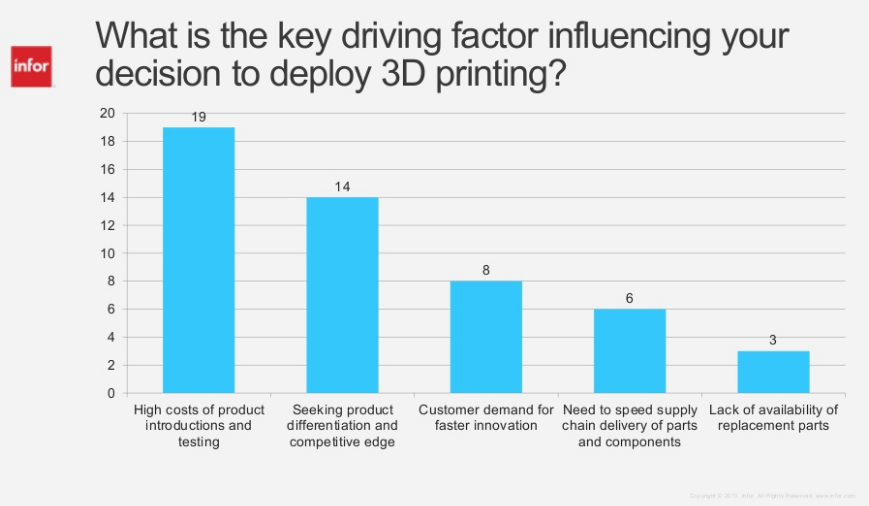
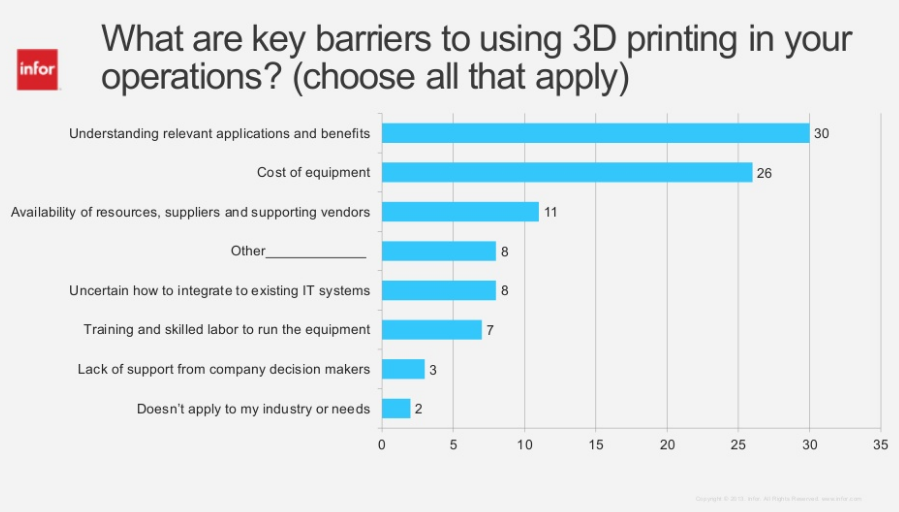
Not convinced yet that 3D printing is the way to prototype? Here are some surveys that might explain your hesitation. Contact us so we can help you along this exciting and innovative journey.